What Is Negative Gearing? The Honest Guide (No Spin, No Hype)
What Is Negative Gearing?
Negative gearing is one of Australia's most talked-about tax strategies — and one of the most misunderstood. You've heard it in property conversations, in political debates, and probably from that person at a dinner party who swears it's the secret to building wealth. But what does it actually mean? And is it right for you?
Let me cut through the noise and give you the honest version.
The Basic Definition
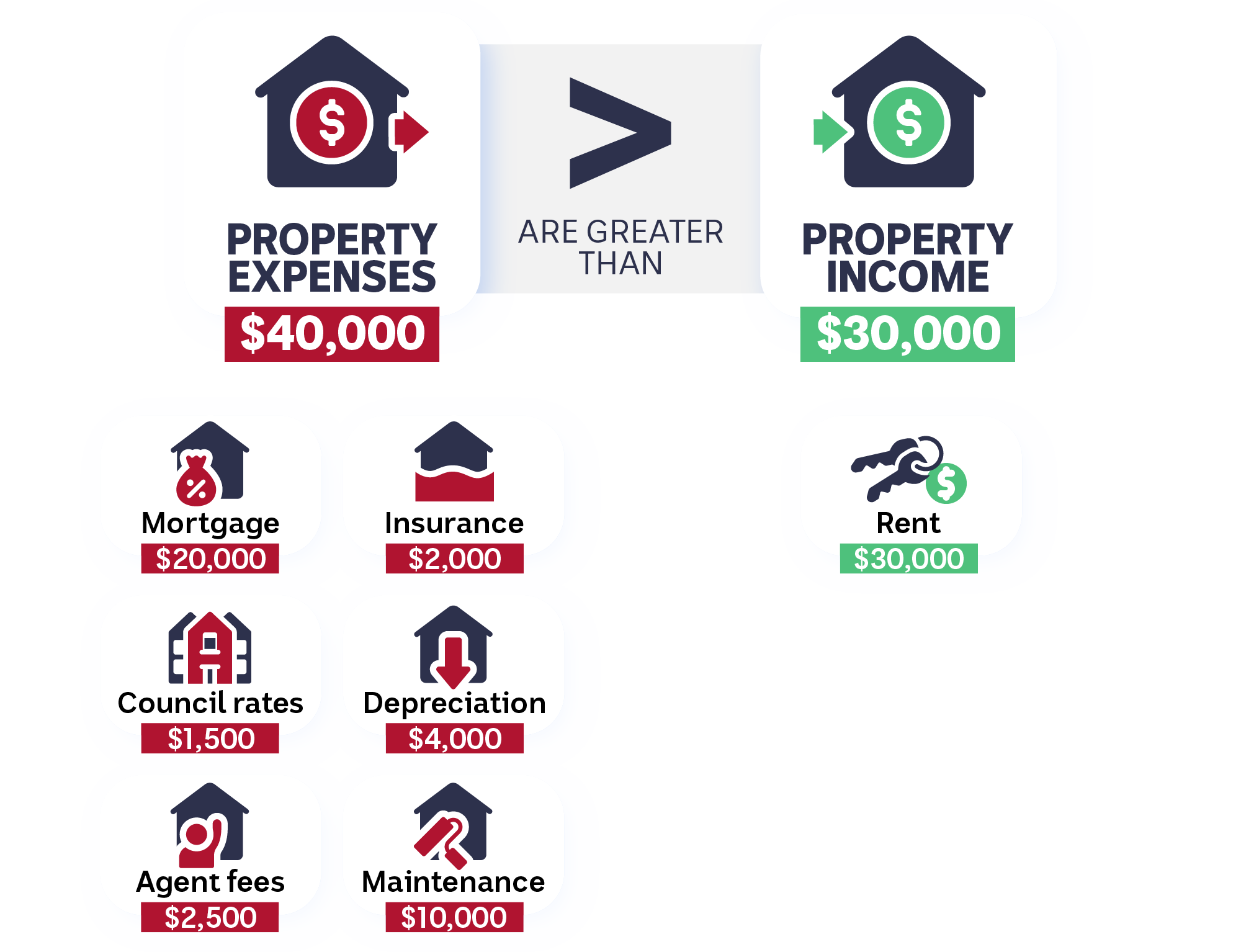
An investment is negatively geared when the costs of holding it — including loan interest, maintenance, management fees, and depreciation — exceed the income it generates.
In plain English: you're spending more on the investment than it's earning you. You're running at a loss.
The reason people do this deliberately is the tax benefit: in Australia, you can offset that investment loss against your other income (like your salary), reducing your taxable income and your tax bill.
A Simple Example
Let's say you own an investment property:
- Annual rental income: $24,000
- Annual costs (interest, rates, insurance, management, maintenance): $32,000
- Net loss: $8,000
That $8,000 loss can be offset against your salary income. If you earn $100,000, your taxable income drops to $92,000. At a 37% marginal tax rate, that's a tax saving of $2,960.
So you're losing $8,000 on the property but saving $2,960 in tax — meaning your real out-of-pocket cost is $5,040 per year. The bet you're making is that the property will grow in value by more than that over time.
Negative Gearing and Property
Negative gearing is most commonly associated with investment property in Australia, and for good reason — the combination of rental income, depreciation deductions, and capital gains tax concessions has made it a popular strategy for property investors.
Key property-specific deductions include:
- Loan interest — the biggest deduction for most investors
- Depreciation — on the building structure and fixtures (requires a quantity surveyor report)
- Property management fees
- Maintenance and repairs (not improvements — those are capitalised)
- Council rates, water rates, landlord insurance
- Advertising for tenants
Negative Gearing and Shares
Negative gearing isn't just for property. You can negatively gear shares too — if you borrow money to invest in shares and the interest on your loan exceeds your dividend income, you have a negatively geared share portfolio.
This is less common than property negative gearing, but it's a legitimate strategy — particularly when combined with a debt recycling approach.
The Capital Gains Tax Connection
Negative gearing only makes financial sense if your investment grows in value over time. The strategy relies on capital growth to offset the annual losses you're absorbing.
When you eventually sell a negatively geared asset, you'll pay capital gains tax (CGT) on the profit. But if you've held the asset for more than 12 months, you're entitled to the 50% CGT discount — meaning you only pay tax on half the gain. This is a significant concession that makes the long-term maths work for many investors.
Is Negative Gearing Actually a Good Strategy?
Here's the honest answer: it depends entirely on your situation, your tax rate, and the quality of the asset you're buying.
Negative gearing works best when:
- You're on a high marginal tax rate (37% or 45%) — the higher your rate, the bigger the tax saving
- You're buying a quality asset with strong capital growth potential
- You have the cash flow to absorb the annual losses comfortably
- You have a long investment horizon (10+ years)
Negative gearing does not make a bad investment good. If the property or shares don't grow in value, the tax saving doesn't compensate for the losses. The tax benefit is a bonus — not the reason to invest.
The Risks to Understand
- Cash flow pressure: You're spending more than you're earning every month. If your income drops or interest rates rise, this can become unsustainable.
- Vacancy risk (property): If your property sits empty, you lose the rental income but still pay all the costs.
- Market risk: If the asset doesn't grow in value, the whole strategy fails.
- Legislative risk: Negative gearing rules could change. This has been debated politically for years — it's a real (if currently unlikely) risk.
- Leverage risk: Borrowing to invest amplifies both gains and losses.
Negative Gearing vs. Positive Gearing
A positively geared investment earns more than it costs — your rental income exceeds your expenses, and you have a net profit. This profit is taxable, but you're cash flow positive from day one.
Neither strategy is universally better. Positive gearing gives you cash flow now; negative gearing gives you a tax saving now and bets on capital growth later. The right choice depends on your goals, your tax position, and your cash flow situation.
What Should You Do?
Before implementing any gearing strategy, you need to understand:
- Your current tax position and marginal rate
- Your cash flow — can you comfortably absorb the annual losses?
- The quality of the asset you're considering
- Your investment time horizon
- Your overall financial goals
Negative gearing is a legitimate wealth-building strategy when used correctly. But it's not a shortcut, and it's not right for everyone. If you're considering it, get proper advice first — not from a property spruiker, not from a mortgage broker, but from a qualified financial planner who can look at your whole financial picture.
This article is general information only and does not constitute personal financial advice. Please consult a qualified financial adviser before implementing any investment strategy.
About Jessie Culgan
Jessie Culgan is a qualified financial planner and the founder of Culgan Wealth. With years of experience helping Australian women build real, lasting wealth, Jessie created Culgan Wealth to make professional financial education accessible to everyone. Real money. Real talk.
General Advice Disclaimer: The information in this article is general in nature and does not take into account your personal financial situation, objectives, or needs. It is provided for educational purposes only and does not constitute personal financial advice. For advice tailored to your circumstances, please consult a qualified financial adviser or contact Jessie at culganwealth.com.au.

Jessie is a qualified financial planner and certified technical analyst with 8+ years of experience across ASX equities, US markets, and superannuation. She built Culgan Wealth to make real financial education accessible to everyday Australians — no jargon, no fluff.
Join the Community — It's Free